Consent Doesn't Have a B-Roll Exception: The Questions I Ask Friends Before They End Up in a Vlog
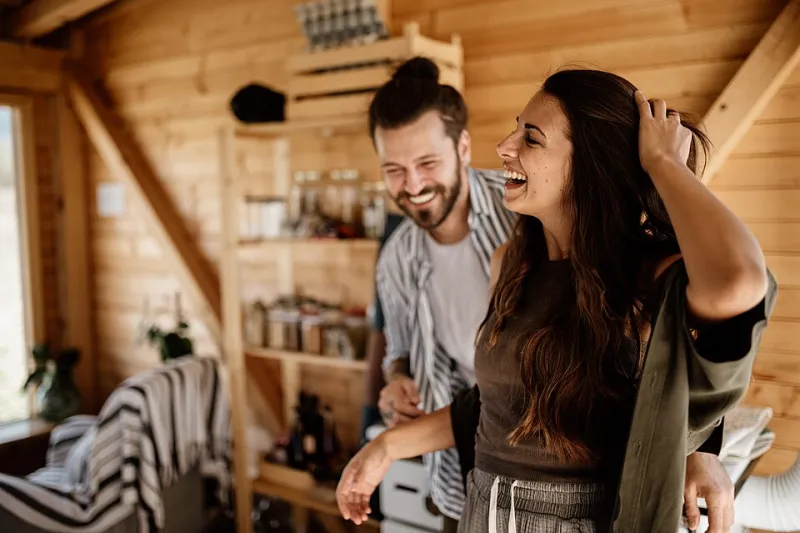
Photo: Shixart1985, CC BY 2.0, via Wikimedia Commons
Two years ago I posted a nine-second clip of a friend crying in a parking garage. It was, technically, the funniest thing that happened that month — she'd dropped a whole cake, and the sound she made was somewhere between a laugh and a car alarm. It was three seconds into a larger edit. I barely looked at it before it went up.
She texted me at 2 a.m. and asked me to take it down. Not angry. Worse than angry. Polite. That 'I don't want to make this a thing' politeness that tells you it's already a thing.
I took it down in forty seconds. It had already been seen. And I've been chewing on that clip ever since, because the honest answer to 'why did you post it' is that it was on my timeline and it was already at 1:12 in the sequence and I didn't think about it. Which isn't a reason. That's just the absence of a reason.
'It's just b-roll' is doing a lot of work
Creators say this constantly, and it always means the same thing: 'I didn't build a video around this person's worst moment, I just left the camera running while it happened.'
But context of intent is not context of consequence. The friend whose face is in your b-roll doesn't experience it as background texture. She experiences it as the day she sobbed outside a Cheesecake Factory being seen by your followers, in perpetuity, with ad revenue attached that she doesn't get a penny of. Background for you is foreground for her.
There's also the asymmetry nobody mentions: I hold the camera, I hold the edit, I hold the post button, and the platform's comment section is a machine that makes jokes. I can absorb a rough comment thread. Someone who posted nothing, chose nothing, and is in your video for nine seconds has signed up for none of it.
The questions I run now
I don't hand people a contract. That's weird and it would ruin the night. But I do have five questions, and I run them before I hit publish — not before I film, because catching the moment is fine, it's the publishing that's the decision.
- Did this person know the camera was rolling? Not 'was in the same apartment.' Knew.
- Does the clip show them in a state they'd show a stranger? Crying, drunk, sick, mid-argument, eating terribly, having a bad body day. Verticals like this go wide.
- Would I post this about myself without hesitating? If the answer is no, that's my answer too.
- Is the joke at their expense or ours? There's a difference between a group chat laughing with someone and a comments section laughing at them.
- Would they know how to ask me to take it down? If it would be awkward for them to ask, the real answer is they can't.
Five questions, maybe ninety seconds of actual thought. Which is a lot less time than the forty it took to pull the first clip down, and a fraction of the two years I've spent thinking about it.
The group chat clause
Around my actual friends, I've made this explicit — it lives pinned in a chat and everybody has copies. The short version:
- If you're in a vlog and you hate it, text me and it comes down. No debate. You don't need to explain and I won't ask what happened.
- Anything you say while the camera is theoretically running is off-limits unless I ask after the fact. 'I was mic'd' is not a loophole.
- No clips of anyone's family, kids, medical stuff, or jobs without a separate, direct yes from them.
- If a clip is already performing well, that changes nothing. Especially then.
- Every friend has standing permission to say 'not this one' about anything, anytime, without it becoming a bit on the channel.
That last point is the one that took me longest to learn. Some creators turn a friend's discomfort into content — the eyeroll, the 'she's gonna kill me,' the performative apology. That converts someone's no into a joke, which is a very effective way to make sure they never use the word again.
Blurring is not a personality
The internet's favorite move is the soft blur and a 'keeping her anonymous' caption. I'm not against it, but it isn't consent, and it shouldn't be sold as if it is. A blurred face with a distinctive jacket, a known apartment, and your own voice saying her name in the audio is not anonymous. If you wouldn't feel comfortable explaining the setup to the person's mother in a sentence, the blur is decoration.
Same with the 'I'll cut it if you want' offer that never gets repeated, or a tag they can't delete, or a story that expires before they can see a request through. Convenient forgetting isn't a privacy policy.
What I'd tell a friend who's starting
Honestly: put the friendship above the footage. Every single time.
The clip of the cake is gone. My friend and I still have dinner. There is no version of this where the nine seconds were worth anything close to that trade — and I win that trade over and over, with almost every friend I film, every month I don't post something.
The measure of a good creator in 2026 isn't how much you catch. It's how much you decline to use. Nobody gives you a number for it, and it doesn't show up in analytics, but your friends can tell. They're the only audience that knows what you decided not to post.