Everything I Know About Thrifting, I Learned in My Grandma's Kitchen

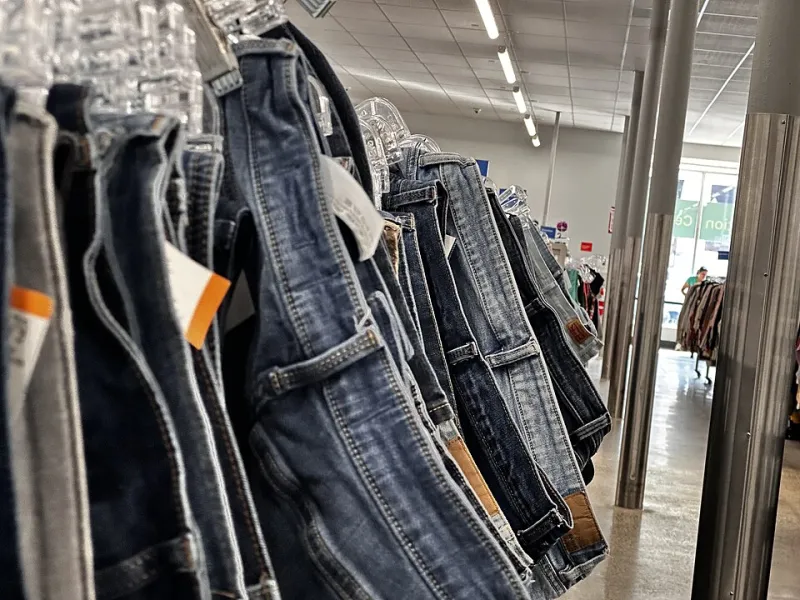
Photo: Sir Amugi, CC BY-SA 4.0, via Wikimedia Commons
My grandma — the kids on TikTok would call her an "og thrift flip queen," which would confuse her greatly — has never paid more than $12 for a coat. She dressed three kids on a teacher's salary in the seventies and eighties, and she did it with a set of shopping habits so sharp they feel almost radical now.
Last month I spent a Saturday at her kitchen table in Ohio with a tape measure and a mug of coffee, taking notes. Then I took her rules to the thrift stores and tested them against everything I've learned from reseller apps and TikTok hauls. Grandma won. She won almost every time.
Here's her playbook, decoded.
1. Check the Seams Before You Fall in Love
My rule: see cute top, check the tag, buy it. Her rule: flip the garment inside out before you even look at the tag.
"The inside tells you the truth," she says. She runs her thumb along the seams — if the stitching is loose, puckering, or the seam allowance is basically nonexistent, walk away. Fast fashion often skips the finishing steps that make a garment survive washing. A vintage wool skirt with clean French seams will outlive three fast-fashion dupes of the same silhouette.
Test result: I almost bought a trendy cropped jacket until the inside-out check revealed unraveling seam tape. Saved $18 on something that would've fallen apart in a month.
2. The Hem Tells You the Era (and the Quality)
Grandma can date a dress by its hem from across the store. Deep hems — an inch or more of extra fabric folded up inside — mean the garment was made to be altered, which usually means it was made well. Blind hems done by hand? Often a sign of quality tailoring.
For Gen Z shoppers, here's the practical takeaway: a generous hem means you can take a too-long midi skirt up or let a cropped pair of trousers down. It's built-in customization that no algorithm can suggest for you.
3. Shop the Men's Rack. Always.
This one changed my life, and I'm not being dramatic. Grandma bought my grandpa's oversized flannels back in 1985 and wore them belted for decades — the original "boyfriend shirt," long before it was a search term.
The men's section is where the good fabrics hide: heavy cotton tees, real wool sweaters, sturdy denim, and boxy cuts that are currently exactly what everyone wants anyway. Men's XL graphic tees are also the cheapest raw material for a cropped or oversized look you'll find anywhere.
Test result: A men's cashmere-ish v-neck, $7. Similar women's sweaters in the same store: $22 and thinner.
4. Touch Everything, Even the Ugly Stuff
My method is visual — scan the rack for colors and prints. Grandma's method is tactile: she touches every hanger, because fabric quality doesn't care what the garment looks like on a hanger.
"A plain navy dress in good wool is worth more than a fun polyester dress that pills," she told me, while pulling a truly unfortunate 1987 blouse off the rack purely to demonstrate what cheap fabric feels like. Fair. A boring, well-made blazer can be tailored; a cute, badly-made one cannot be saved.
5. Buy for the Fit You Can Fix, Not the Fit You Wish For
Here's where grandma and the TikTok tailoring crowd finally agree. Her rule: shoulders and hips are expensive to alter; hems and waists are cheap. If a dress zips and the shoulders sit right, buy it — a $10 tailoring job on a $8 dress beats a $60 dress that almost fits.
6. The List Is a Shield
Grandma kept a literal handwritten list in her purse: winter coat, brown loafers, wool trousers. If it wasn't on the list, it didn't come home. "A bargain you don't need is still money spent," which is honestly a more useful personal finance lesson than most of what I was taught in school.
I adapted this for my phone: a running note of gaps in my closet. It has genuinely cut my impulse buys at least in half.
7. Wait. Then Strike.
Her most old-school rule, and the hardest one for someone who posts lookbooks on a schedule: patience. She'd visit a store three times before buying, watching for markdowns. Most thrift stores rotate stock constantly — that coat you're debating will either drop in price or be gone, and either answer is fine.
Grandma vs. The Algorithm: Final Score
Did the apps help at all? Sure. I used a resale app to check what a vintage brand tends to sell for, and a TikTok tip about checking the tag for union labels helped me date a dress. But every single technique that found me a better garment — the seams, the hems, the men's rack, the touching — came from a woman who learned it all out of necessity, decades before "sustainable fashion" was a phrase.
She thinks it's funny that people now pay premium prices for the kind of clothes she bought because she had to. Then she showed me the wool coat she found last week for $9. Still undefeated.