The Grainiest Audio on My Channel Is Now the Part Everyone Rewinds
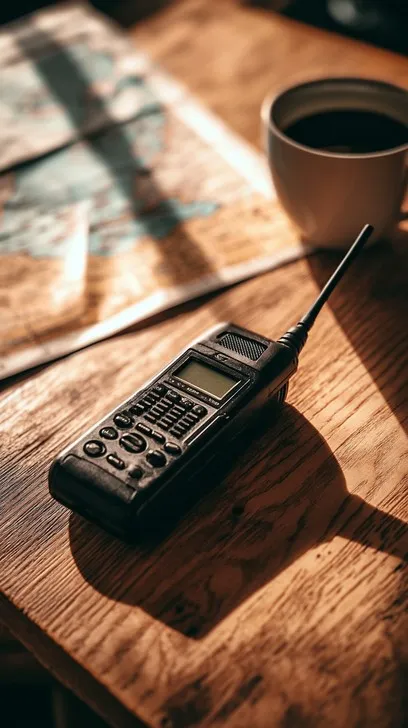
Photo: vintage flip phone on kitchen table with coffee, warm morning light, cozy home, via images.stockcake.com
Every Monday for the past two years, I've opened my vlogs the same way: sitting on my bed, ring light humming, delivering a chirpy little intro I wrote in my Notes app at 2 a.m. the night before. "Hey guys, welcome back!" Twenty-two takes. De-noised audio. A gate that clipped every breath.
Then, three weeks ago, my grandma left me a voicemail at 7:14 a.m. that changed everything.
The Voicemail That Started It
She had watched my Sunday upload — a thrift haul, nothing special — and she had thoughts. Ninety-one seconds of thoughts, recorded on what I can only assume was a flip phone buried in her purse next to butterscotch candies. Halfway through, a bus went by and swallowed her entire point about the green cardigan. At the end, she said, "Anyway, sweetie, I love you, call me back," and hung up like she was paying by the minute.
I was going to delete it. Instead, I laid it under the b-roll of the haul, right where my scripted intro used to go.
The comments within an hour:
- "THE VOICEMAIL. I'm crying."
- "This is the only creator whose grandma reviews her content and I need more."
- "Why does this feel more real than anything on my feed today?"
That last one stuck with me. Because it wasn't a production compliment. It was a trust compliment.
So I made a deal with myself: for one full month, no scripted intros. Every vlog would open with — or be threaded through — one of Grandma's post-upload voicemails. She watches everything anyway. She just didn't know she was on payroll now.
What a Month of Voicemail Voiceovers Actually Looked Like
Week one was chaos. She doesn't leave voicemails on a schedule; she leaves them when the spirit moves, usually mid-morning Midwest time, usually while something else is happening. I got a review of my grocery vlog interrupted by her telling the dog to get off the couch. I got a 40-second clip that was 38 seconds of her trying to find her glasses and four seconds of actual commentary.
I used all of it.
Here's what surprised me: the messy clips performed better. The one where she couldn't find her glasses? My highest average watch time in six months. People rewound it. People quoted it in the comments like a movie line.
By week three, I stopped trying to edit around the imperfections and started editing toward them. If a bus roared past mid-sentence, I'd cut to the street outside my apartment. If she laughed at her own joke before the punchline, I let the laugh run. My editing style, which used to be all snap-zooms and beat drops, slowed way down. The audio dictated the pace, and the pace felt like... breathing.
Why Raw Audio Hits Different
I'm not an audio engineer, but I've read enough Reddit threads at 1 a.m. to know the theory: we're trained to hear compression, to hear a treated room, to hear a voice that's been through a noise gate. Studio-quality narration signals performance. It's the audio equivalent of a smile you hold too long for a photo.
A phone voicemail does the opposite. The slight warble, the room noise, the fact that her mouth is occasionally too close to the receiver — none of it can be faked. You can't manufacture a grandmother who forgot she was being recorded. Listeners hear that authenticity the way you hear a friend's voice across a crowded Target: instantly, and with your whole body.
There's also the intimacy factor. Voicemails are a one-to-one format. When you drop one into a vlog, every viewer gets pulled into the position I'm actually in — a granddaughter listening to her grandma. They're not an audience anymore; they're eavesdropping on family. That's a completely different emotional contract than "hey guys, welcome back."
The Numbers, Because You Know I Checked
I'm not going to pretend the experiment was rigorous — one channel, one month, one grandma — but the pattern was consistent. Every voicemail-driven video outperformed my previous month's average on watch time. Comment sentiment shifted from outfit questions to people sharing stories about their grandmas. My DMs got longer and more personal. One person wrote, "I called my grandma after this and she also hates the green cardigan," which is the kind of comment you frame.
The funny part? My production quality didn't drop on the visual side. I still shot on my usual camera, still colored the footage, still cared. The rawness was confined to one audio layer, and that restraint is exactly why it worked. When everything is unpolished, nothing is. When one element is undeniably, unmistakably real, it makes the whole frame feel honest by association.
Grandma's Review of the Experiment
Of course, I had to close the loop. I told her about the series over Sunday dinner — pot roast, her kitchen, the good napkins — and explained that thousands of strangers now know her voice.
She was quiet for a second. Then: "Well. Somebody in this family should have a radio voice."
Then she asked if the videos paid more now. I said a little. She said, "Then I want my cut in plants for the porch."
Deal, Grandma. Deal.
The month's over, but the voicemails aren't going anywhere. My new rule is simpler than any script I've ever written: if it sounds like a real person talking to me, it stays. Everything else can go through the noise gate.